You’ve found the one, shaken hands and driven it home. Now comes the part most new owners skip: finding out exactly what you bought.
A motorhome is a vehicle and a small home rolled into one. The previous owner may have looked after both halves, one half or neither. If you bought privately, there is no dealer guarantee to fall back on, and a pink slip only tells you the vehicle was roadworthy on the day it was checked. It says nothing about the roof seals, the house batteries or the gas fittings behind the cooktop.
This guide explains what a motorhome post-purchase inspection covers, when to book one, which faults private buyers find most often, how to prioritise repairs, and which upgrades are worth doing early. It is written for new owners in Sydney and across NSW, including anyone who bought privately, interstate or from another dealer.
What is a motorhome post-purchase inspection?
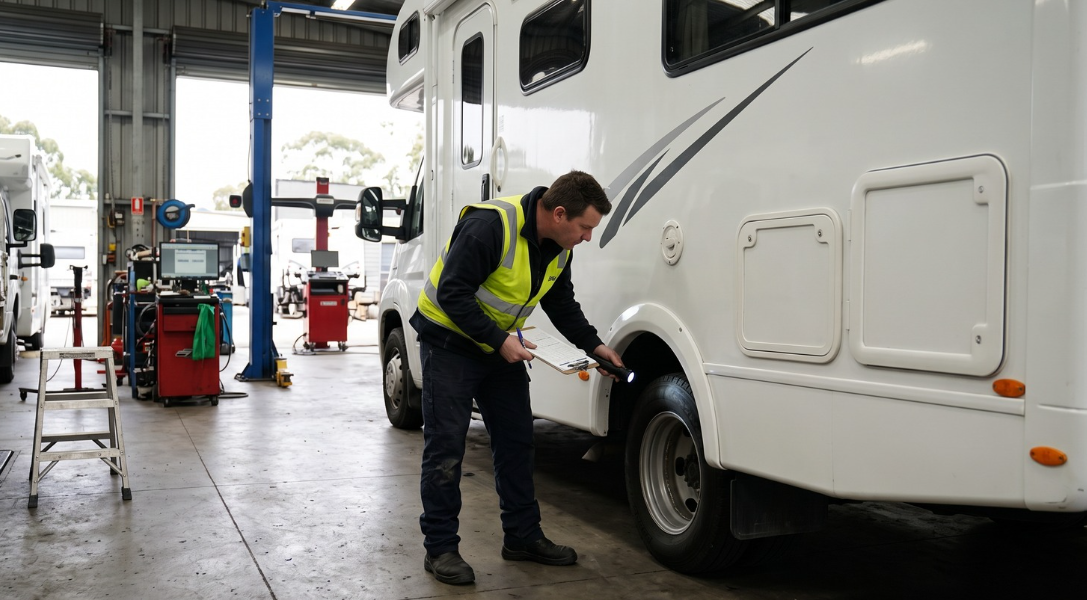
A motorhome post-purchase inspection (also called a health check) is a full condition check of a motorhome you already own, covering both the base vehicle and the living area, so you know what needs fixing now, what can wait, and what to plan for.
Definition: A post-purchase health check gives a new owner a documented starting point. It records the condition of the roof, body, 12V and 240V electrical systems, gas, water, appliances, chassis and safety gear, then ranks every finding by safety and cost.
The difference from a pre-sale check is timing and purpose. The decision to buy is already made. The goal now is to make the motorhome safe, reliable and set up for the way you travel, and to start a service history you control.
Why get a health check if the motorhome already has a pink slip?
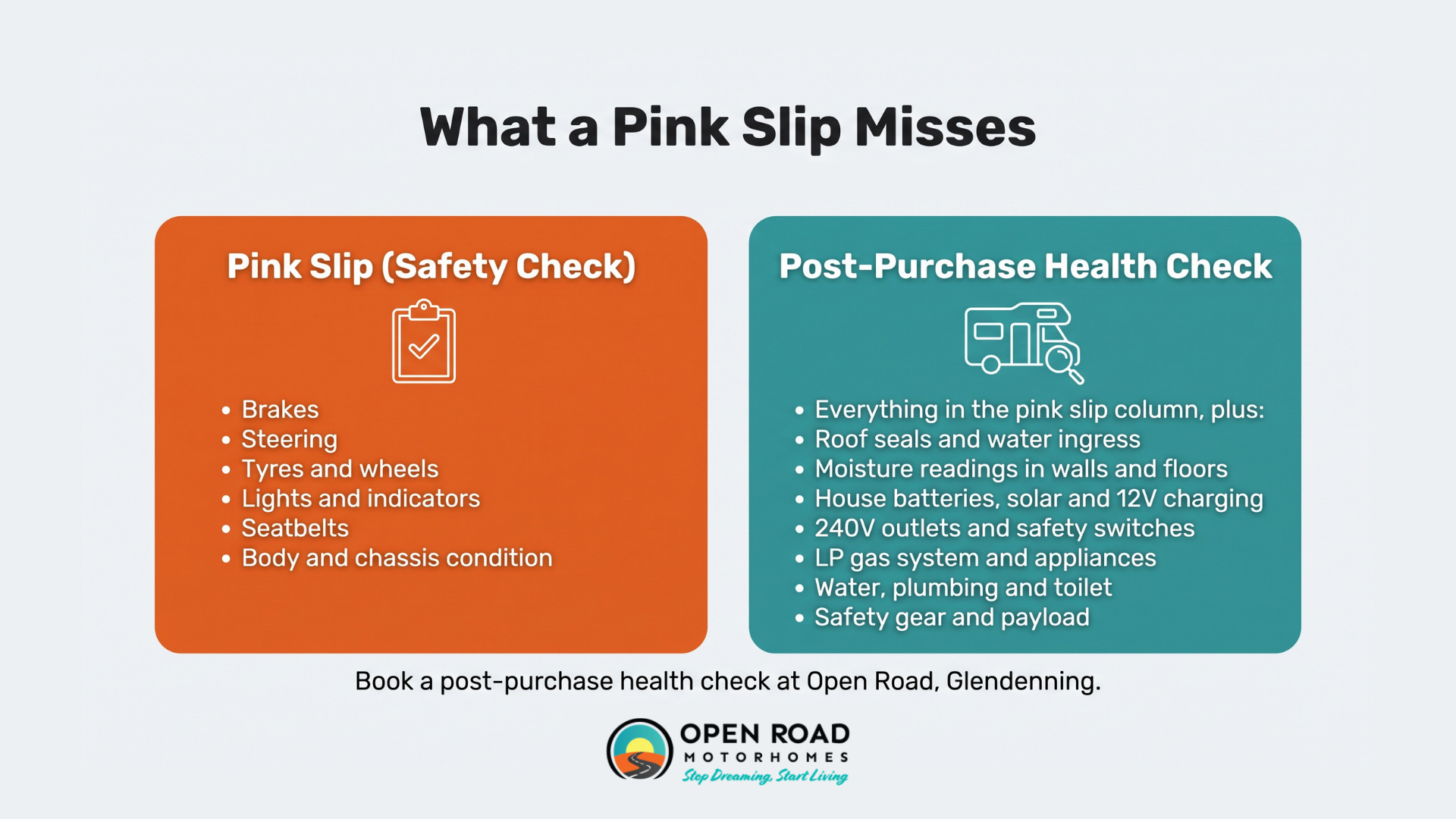
A pink slip or eSafety check reports on roadworthiness, not habitability, so it leaves the most expensive parts of a motorhome untested. In NSW, most light vehicles more than five years old need a yearly vehicle safety inspection report (pink slip) at registration renewal, carried out at an Authorised Inspection Scheme station. That check looks at items such as brakes, tyres, lights, seatbelts and steering. In other words, it confirms a vehicle meets the minimum standard to stop, steer and operate legally on public roads.
It does not look at:
- Roof seals, hatches and the cab-over peak, where most water damage starts
- Moisture inside walls and floors
- House batteries, solar charging, the DC-DC charger and the inverter
- The 240V system, outlets and safety switches
- LP gas lines, the regulator and gas appliances
- Fresh, grey and black water systems and the toilet
A motorhome needs structural, electrical and habitation checks that a pink slip was never designed to cover.
The way you bought the motorhome matters too:
- Bought privately: NSW Fair Trading is unable to help resolve problems with private sales, and the Australian Consumer Law does not offer protections for private sales. Any fault you find is yours to fix.
- Bought from another dealer: in NSW, a used vehicle under 10 years old with less than 160,000 km generally carries a statutory dealer guarantee of 3 months or 5,000 km, whichever comes first. Older or higher-kilometre motorhomes have no dealer guarantee. A health check early in that window documents faults while you can still raise them with the selling dealer.
- Sat in storage: motorhomes that sat for months often have flat house batteries, perished hoses, sticky brakes and old tyres with plenty of tread.
When should you book a post-purchase inspection?
Book within the first two weeks of ownership and before your first long trip. Early booking matters for three reasons: faults get cheaper to fix the sooner they are found, any dealer guarantee window is still open, and you avoid discovering a problem 500 km from home.
Book sooner if any of these apply:
- You bought privately or through an online marketplace
- The motorhome came with little or no service history
- You bought it interstate and still need to register it in NSW
- It had been in storage or unused for six months or more
- The seller mentioned a recent leak repair, new silicone or “just needs a re-gas”
- Previous owners added solar, lithium batteries, an inverter or a diesel heater
Paperwork has its own clock. In NSW, the buyer must transfer registration within 14 days of buying the vehicle to avoid a late fee. Motorhomes over 4.5 tonnes GVM cannot be transferred online and need a visit to a service centre. If the motorhome is not currently registered in NSW, it will need an Authorised Unregistered Vehicle Inspection Scheme (AUVIS) inspection before it can be registered. Check the Service NSW website for the requirements that apply to your vehicle.
What does a post-purchase motorhome health check cover?
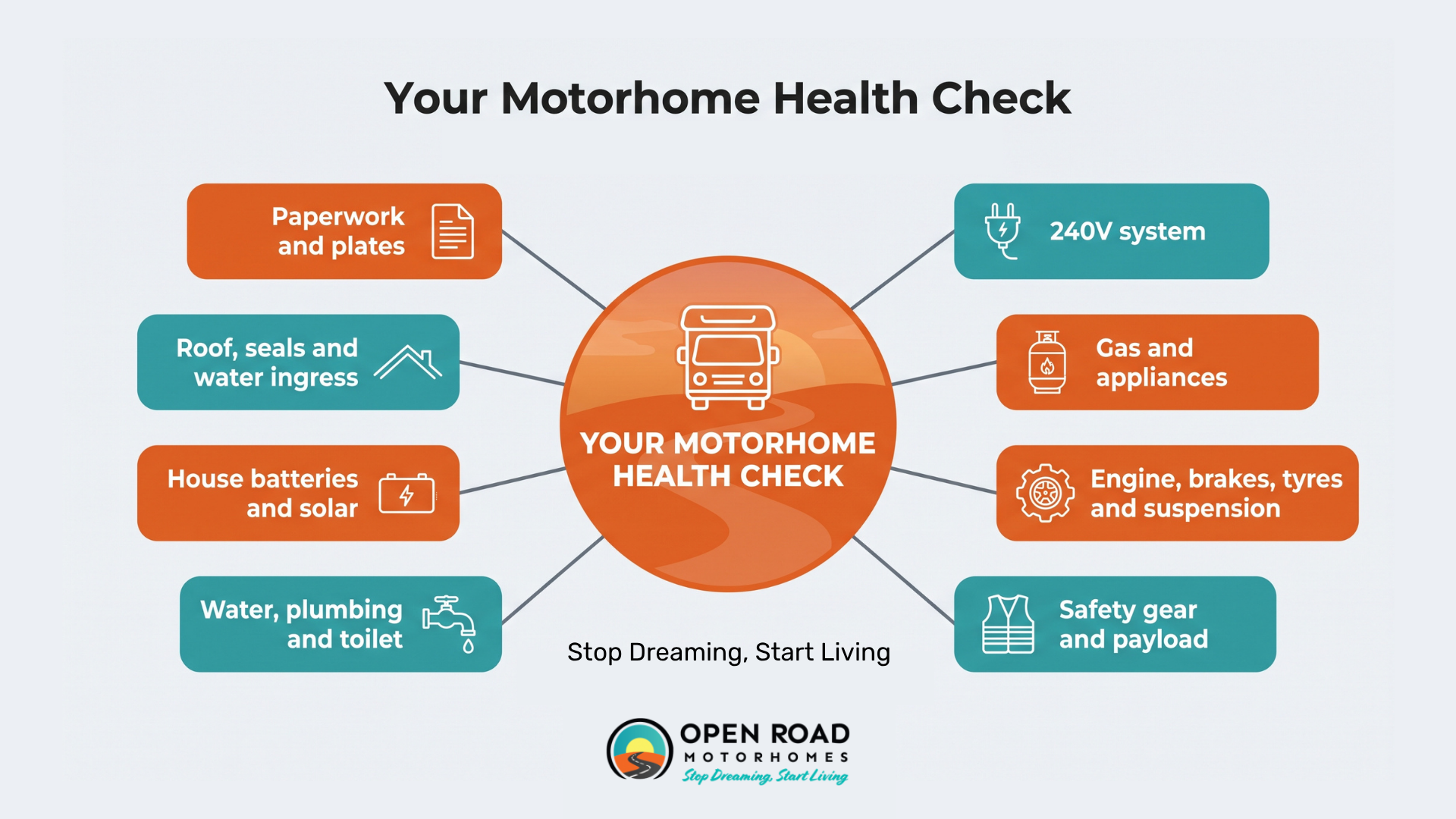
A thorough health check covers eight areas across the base vehicle and the living area. If a workshop only covers the engine, brakes and tyres, you are getting half the picture.
1. Paperwork, compliance plates and service history
The technician records the VIN, compliance plate details, odometer reading and the gas compliance plate, then reviews whatever service records came with the motorhome. This sets your baseline.
Gather these before your appointment:
- Registration papers and the compliance plate figures (GVM and tare)
- Service history for the base vehicle (Fiat, Mercedes-Benz, Iveco, Ford, Renault or similar)
- Records of habitation work: roof re-sealing, gas, electrical, solar
- Owner’s manuals for the fridge, hot water system, heater and inverter
- Receipts for any batteries, solar or accessories added by previous owners
Missing records are not a deal-breaker after purchase. They simply mean the health check becomes your new starting record.
2. Roof, seals and water ingress
Water ingress is the most expensive common fault in used motorhomes, and early detection is what keeps the repair small. Water enters through a tired seal around a roof hatch, air conditioner, awning rail, window or the cab-over peak, then travels inside the wall before it shows.
A proper check includes:
- Every roof seal, hatch and fitting inspected from on top, not from the ground
- Side walls checked for bubbles, ripples or waves that suggest delamination
- Floors pressed near the door, shower, toilet and rear corners for softness
- Moisture readings on walls, floors and corners
- Lockers and wardrobes opened to check for staining or a musty smell
One elevated reading near a fitting is usually a seal job. A pattern of high readings means the leak has been running for a while. Our workshop handles roof re-sealing and water leak testing and repairs, so findings can be fixed in the same place they are found.
3. House batteries, solar and 12V charging
The 12V system is where private buyers find the most “it worked when we looked at it” surprises. A house battery can show full voltage at rest and still fail under load after an hour of running the fridge and lights.
The technician checks:
- Battery type (AGM or lithium), age and capacity under load
- Charging from the alternator or DC-DC charger while driving
- Solar input at the regulator in daylight
- Mains charging when plugged in
- Fuses, cabling and any non-standard wiring added by previous owners
Our motorhome electrical repairs team handles 12V fault-finding, and our solar diagnostics and repairs service tests underperforming panels and regulators.
4. 240V mains system
The 240V check confirms the motorhome is safe to plug into a caravan park supply. The technician tests outlets, the safety switch (RCD) and the inverter, and looks for amateur wiring behind panels and in lockers.
In Australia, electrical installations in caravans and motorhomes fall under AS/NZS 3001.2:2022, the standard for connectable electrical installations. Vehicles completed before 18 November 2023 can lawfully be built to that standard or the earlier AS/NZS 3001:2008. Any 240V repair or alteration must be done by a licensed electrician.
5. Gas system and gas appliances
The gas check is a safety check first. The technician looks for the gas compliance plate, inspects the regulator and hoses for age and cracking, leak tests the system and runs every gas appliance: cooktop, oven, fridge on gas, hot water system and any gas heater.
LP gas installations in caravans and motorhomes must comply with AS/NZS 5601.2:2020. In NSW, this standard is enforced through the Gas and Electricity (Consumer Safety) Regulation, and it is illegal to have an unqualified person carry out LP gasfitting work. Any gas repair must be done and certified by a licensed gasfitter.
Warning signs to report straight away: a gas smell, a burner that will not stay lit, or a fridge that will not run on gas.
6. Water, plumbing and toilet
The technician fills and runs the fresh water system, checks the pump stops cycling when taps are closed (a pump that keeps cycling usually means a leak), tests the hot water system and looks under every sink, around the shower and behind the toilet for leaks.
They also check the grey and black water valves, the toilet seal and cassette, and the fresh water filler and tank. If the system has been sitting, it should be flushed and sanitised before you drink from it. Leaks found here tie back to the moisture readings in area 2, because slow plumbing leaks are a common cause of floor rot. We carry out water and plumbing system repairs at our Glendenning workshop.
7. Engine, brakes, tyres and suspension
The base vehicle check covers fluids, belts, hoses, cooling, brakes, steering, shock absorbers and suspension, plus a road test. Motorhomes work hard at full weight, so worn brakes and tired shocks matter more than they would on a car.
Tyre age is the item new owners miss most. Motorhomes often sit for long periods, so tyres can have deep tread and still be past their safe life. The four-digit date code on the sidewall shows the week and year of manufacture (2219 means week 22 of 2019). Cracking in the sidewall or between tread blocks means replacement, whatever the tread depth. Check the spare too.
If the motorhome came without a recent chassis service, book one now so you know exactly when the oil, filters and fluids were last changed.
8. Safety gear, weight and payload
The last area covers the items that protect you in an emergency and keep you legal on the road:
- Smoke alarm present and working
- Fire extinguisher and fire blanket present, in date and easy to reach
- Gas cylinders secured in a vented compartment
- GVM and tare checked against the compliance plate
Payload is the difference between GVM and what the motorhome weighs. Some motorhomes have only a few hundred kilograms to spare once you add water, gas, people, food and gear. In NSW, a standard car licence covers vehicles up to 4.5 tonnes GVM. Above that you need a light rigid (LR) licence. If you have added bikes, a second battery or a full water tank, weigh the motorhome at a public weighbridge before your first long trip.
What problems do private buyers find most often?
Most post-purchase findings fall into a small number of patterns, and almost all of them are cheaper to fix early than late.
| Common finding | Why it happens | What to do |
|---|---|---|
| Damp readings near a roof hatch, window or awning rail | Seals dry out and crack with age and sun | Re-seal the fitting and retest before the next wet season |
| House battery fails under load | Batteries left flat in storage, or simply at end of life | Replace, and decide between AGM and lithium based on how you travel |
| Solar not charging properly | Faulty regulator, loose connection or shaded or dirty panels | Solar diagnostic test, then repair or upgrade |
| Fridge will not cool on gas or 12V | Blocked burner, failed igniter or wiring fault | Appliance service or fridge repair or replacement |
| Old or cracked tyres with good tread | Motorhome sat for long periods | Replace the full set, including the spare |
| Water pump keeps cycling | Small leak in a fitting, tap or hot water system | Trace the leak and repair before it reaches the floor |
| Gas regulator or hoses past their service life | Rubber components age even when unused | Replace and leak test by a licensed gasfitter |
| Awning torn, stiff or not locking | UV damage and lack of use | Awning repair or replacement |
| Air conditioner weak or noisy | Dirty filters, failed fan or low performance with age | Air conditioning service, repair or replacement |
| Amateur wiring behind panels | DIY additions by previous owners | Inspection and rectification by a licensed electrician |
How should you prioritise repairs after buying?
Rank every finding by safety first, then by the risk of the problem getting more expensive, then by how much it affects your travel. This stops you spending on upgrades while a leak spreads.
| Priority | What belongs here | When to act |
|---|---|---|
| Fix before you travel | Gas leaks or faulty gas fittings, unsafe 240V wiring, worn brakes, cracked or aged tyres, failed smoke alarm | Before the next trip |
| Fix within the first month | Active water leaks and damp readings, failed house battery, water pump leaks, fridge faults | Within weeks, before the damage spreads |
| Plan in the first year | Full roof re-seal on an older motorhome, shock absorbers, awning repair, air conditioning service | Book around your travel plans |
| Upgrade when ready | Lithium batteries, more solar, diesel heater, accessories | When you know how you like to travel |
Ask for written quotes on anything in the first two rows so you can plan the spend.
Your first 30 days: a step-by-step plan
A simple sequence in the first month turns a new-to-you motorhome into one you trust.
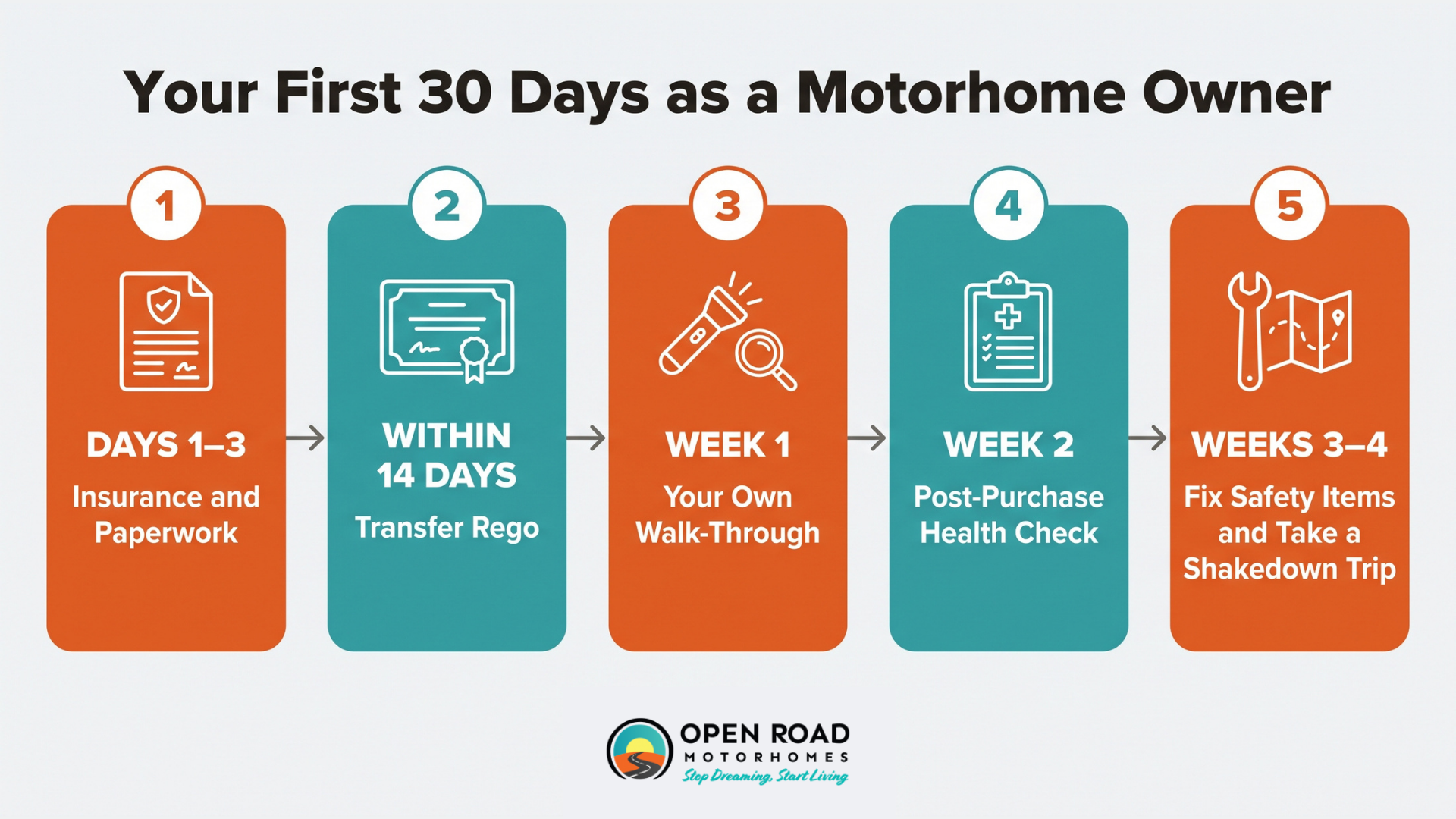
- Days 1 to 3: Insurance and paperwork. Arrange motorhome insurance that covers both the vehicle and its contents. Gather every document and manual the seller gave you.
- Within 14 days: Transfer the registration. Complete the NSW registration transfer to avoid the late fee. If the motorhome is registered interstate or over 4.5 tonnes GVM, allow time for the extra steps.
- Week 1: Do your own walk-through. Use the checklist below to note anything obvious before your appointment.
- Week 2: Book the post-purchase health check. Bring your notes, records and keys to every locker. Ask for findings ranked by priority with photos.
- Weeks 3 to 4: Fix the safety items, then take a shakedown trip. Spend one or two nights at a caravan park close to home. Use every system: water, gas, heater, solar, awning, toilet. Note anything that does not work as expected and bring it back while the list is short.
After that, set a regular service schedule for both the base vehicle and the habitation side, and keep every receipt in one folder.
What can you check yourself in the first week?
A 30-minute walk-through gives you a list to bring to your health check and helps the technician focus on what you have noticed. It does not replace the professional check, because moisture readings, gas leak testing, battery load testing and 240V testing need equipment and licences.
- Write down the VIN, GVM and tare from the compliance plate
- Read the date codes on every tyre, including the spare
- Look along each side wall in low light for bubbles or ripples
- Press the floor near the door, shower, toilet and rear corners
- Open every locker and wardrobe and check for staining or a musty smell
- Run the water pump, close all taps and listen to whether it stops
- Plug into mains power and check the lights, outlets and battery charger display
- Turn on the fridge and check it cools on each power source it supports
- Find the gas compliance plate and note the date
- Press the test button on the smoke alarm and check the extinguisher gauge
- Extend and retract the awning and any steps
- Start the engine cold and note any warning lights or unusual noises
For trips after that, our motorhome pre-trip safety checklist covers the checks to run before every departure.
Which upgrades are worth doing after you buy?
The best upgrades are the ones that fix a limit you have already hit on the road, so wait until after your shakedown trip before spending big. The health check tells you what the motorhome has now. A few nights away tell you what you actually need.
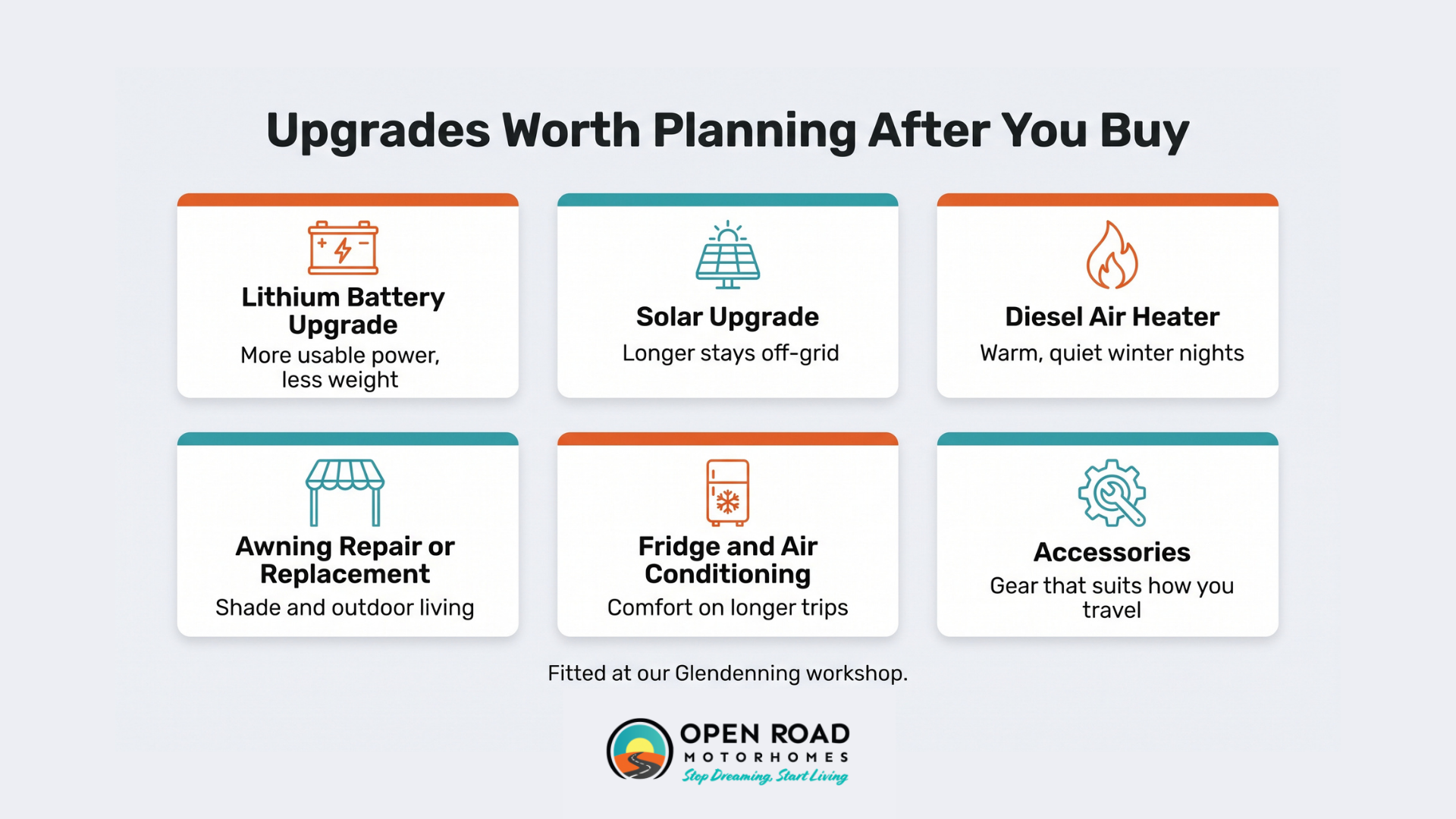
Common upgrades new owners ask about:
- Battery upgrades: Moving from AGM to lithium gives more usable capacity and less weight, but the charger, DC-DC charger and solar regulator must suit lithium batteries.
- Solar upgrades: More panel capacity or a better regulator extends time away from powered sites.
- Diesel air heater fitting: Quiet, efficient heating for cold nights and winter trips.
- Awning replacement and repairs: Shade and outdoor living space, especially for longer stays.
- Fridge and air conditioning upgrades: Worth considering if the originals are tired or undersized for your trips.
- Accessories and upgrades: Anything from storage solutions to travel gear. See our guide to the best motorhome accessories for long-distance travel.
Our Glendenning workshop handles battery and solar upgrades, diesel air heater fitting, awnings, fridges, air conditioning and accessories under one roof, so a health check and upgrade plan can be done in the same visit.
Does a health check help when you sell or upgrade later?
Yes. A documented health check and a full service history make a motorhome easier to sell and support a stronger price, because the next buyer can see what was found and what was fixed.
Keep a simple ownership file:
- The post-purchase health check report and photos
- Invoices for every repair, re-seal and upgrade
- Base vehicle service records
- Gas and electrical work records from licensed trades
When the time comes to change motorhomes, you can sell your motorhome to Open Road or browse our motorhomes for sale to find your next one.
Frequently asked questions
Yes. A pink slip is a basic roadworthiness check and does not test the roof, moisture, house batteries, solar, 240V system, gas appliances or water systems, which is where most repair costs in a used motorhome sit.
Within the first two weeks and before your first long trip. If you bought from a dealer and the motorhome is covered by a dealer guarantee, an early check documents any faults while you can still raise them with the selling dealer.
Yes. Our Glendenning workshop services and repairs motorhomes and campervans whether or not you bought them from us. Call (02) 9832 4372 to book.
A gas certificate is not needed to transfer NSW registration, but any gasfitting work must be done by a licensed gasfitter to AS/NZS 5601.2:2020. If you bought in Queensland, the seller of a registered vehicle with gas fittings must provide a gas certificate, so ask for it if you did not receive one.
You need to register it in NSW, and a vehicle not currently registered in NSW needs an AUVIS inspection first. Heavier motorhomes over 4.5 tonnes GVM go through heavy vehicle inspection requirements. A health check before your first long trip is still worth doing, because a registration inspection does not test the living area.
No. A service is scheduled maintenance such as oil, filters and fluids. A health check is a condition assessment of the whole motorhome that tells you what needs attention, including the habitation systems a chassis service does not cover.
At least once a year and before any long trip, with the habitation side checked alongside the base vehicle service. Motorhomes that sit in storage for long periods benefit from a check before they go back on the road.
Key takeaways
- A pink slip checks roadworthiness only. A post-purchase health check covers the vehicle and the living area.
- Private sales come with no dealer guarantee, so faults are yours to find and fix. Find them early.
- Water ingress is the most expensive common fault. Insist on roof and moisture checks.
- Gas and 240V work must be done by licensed trades to AS/NZS 5601.2:2020 and AS/NZS 3001.2:2022.
- Transfer NSW registration within 14 days of buying.
- Fix safety items first, take a shakedown trip, then plan upgrades.
- Keep every report and receipt. A documented history helps when you sell or upgrade.
Book a post-purchase health check at Open Road
Bought a motorhome privately, interstate or from another dealer? Bring it to us. Our Glendenning workshop handles everything from 12V and solar faults to roof re-sealing, water leaks, fridges, air conditioning, awnings and upgrades, so the problems we find can be fixed in the same place.
Visit us: 3 Enterprise Drive, Glendenning NSW 2761, next to the M7
Workshop Hours: Monday to Friday, 9am to 4pm
Stop dreaming, start living, in a motorhome you know inside out.